Driving Gender Equality: Women’s Networks, Visibility, and the Power of Micro-Inclusions
With Gill Hardy, Head of Executive Talent EMEA and WPP Ambassador for Women, WPP Plc
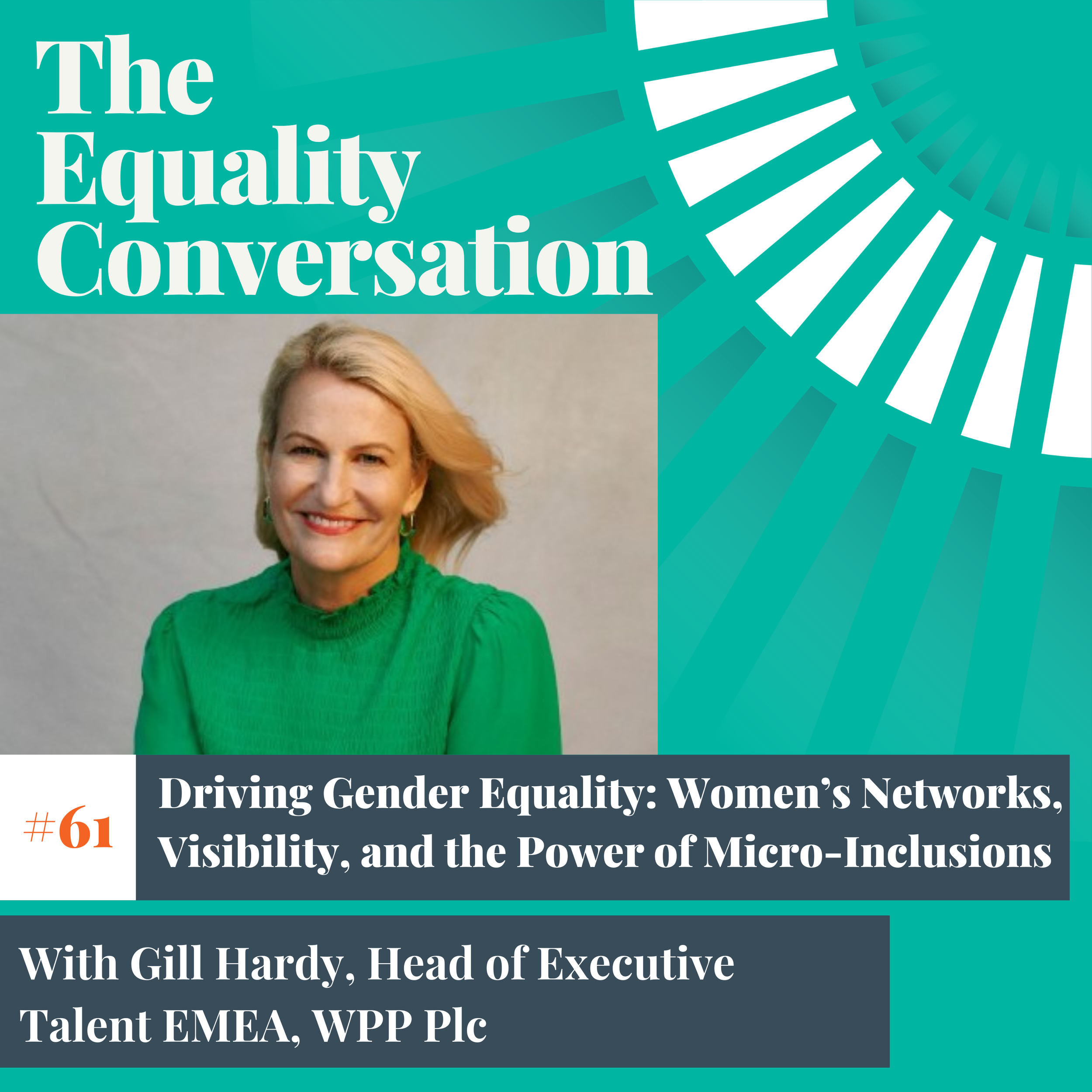
Episode #61: Driving Gender Equality: Women’s Networks, Visibility, and the Power of Micro-Inclusions with Gill Hardy
Series 9, Episode #61, Wednesday 11 February 2026
In this episode, Joy Burnford speaks with Gill Hardy, Head of Executive Talent for EMEA at WPP plc and global lead of WPP’s Stella network for women, about what it really takes to drive gender equality in a global organisation. Gill shares WPP’s approach, from increasing the visibility of female leaders and investing in targeted development, to embedding inclusive policies across the business. She stresses the importance of continuous, data-driven action, noting that the gap between perceived progress and lived reality can be wider than many organisations realise. The conversation also explores the evolving role of women’s networks, the value of welcoming male allies, and how everyday micro-inclusions - such as consciously inviting women to speak first in meetings - can have a powerful impact on culture change.
Soundbites
“It’s a combination of hard data, hearts and minds, and psychology - get something started, and then people will come and follow.”
“The most successful strategy for us was to focus on visibility, so using our women to have fireside conversations, to host conversations with other really interesting people, to just be very present at events, for networking and so on. So we had a whole collection of activities really aiming at increasing the visibility of our female leaders and then inviting all women to attend. So visibility, I can't emphasise enough how important that is.”
“The data will tell the story, which is why it's important to have the data, because people actually look around their workforces and think - it all seems pretty even to me, women seem to be doing pretty well, I’m not sure we've got a problem. I think many companies have that problem, this gap between reality and perception. So data is very important in highlighting the reality, but it is continuous. It's not a one and done. I've been doing it for 10 years, and I would say that we are definitely getting better, because we're more alert to the challenges, but it's a continuous process.”
“One of the actions that I love is that if you're in a group situation or a meeting, and you're chairing the meeting - if you go first to a woman, then all the other women in the room will speak up. If you go first to a man, then unfortunately, the opposite seems to happen.”
“I also love this idea that don't ask a woman questions that you would not ask a man. Ask yourself, would you ask a man that question? It just shows that the ridiculous nature of some of the questions that women are asked, the scrutiny that women face, that men don't.”
Keywords
Gender equality, workplace policies, women's networks, leadership roles, visibility, training and development, data collection, micro inclusions, childcare challenges, growth mindset, executive talent, WPP Stella network, female representation, organisational culture, male allies.
References and resources
Mary Ann Sieghart’s book: The Authority Gap: Why women are still taken less seriously than men, and what we can do about it
Mary Ann Sieghart on The Equality Conversation podcast: The Authority Gap: Lessons for organisations
McKinsey & Company: Women in the Workplace 2025 report on the ambition gap
Carol Dweck's book: Mindset: Changing The Way You think To Fulfil Your Potential
Philippa Gregory's book: Normal Women: The Sunday Times Bestseller – 900 Years of Women Making History
How Encompass Equality can help you
Book a call to see how Encompass Equality can help you create better workplaces for women, and in doing so, create a culture where everyone benefits.